By
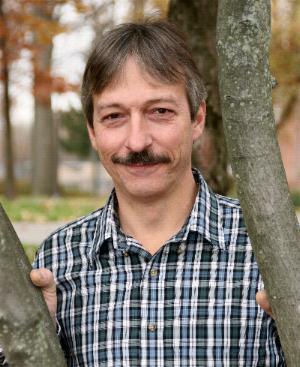
Stephen J. Hartzell
Last updated Sept. 25, 2021
Feature Articles
Last updated Sept. 25, 2021
The Timing Couldn't Have Been Better!
2001 Heritage Festival A Patriotic CelebrationWest Lodi Union Church, 1844 - 2002
JOUAM Orphans Home - 1910 Census
Photos of St. John's Hollow, 1979
Voices From The Past - Historic Letters & Writings
1908 - S. Washington St., Tiffin, Ohio
The Death Of Janie - From The Heidelberg Monthly, May, 1859
A Look At Tiffin, Iowa - Original Photos of an Iowa Town
Historic Photos From Tiffin & Seneca County
Seneca County People Who Have Served in the U. S. Congress
The Roster of the 8th Ohio Volunteer Infantry
Ohio Football Links - A List of High School, College & Pro Links
The History of Tiffin Calvert Football
Seneca Sprints - Past & Present Sprint Car Racers of Seneca County
1768 - The Senecas of the Sandusky
By this time, as mentioned at an Iroquois Council of that year, a group of indians began moving into this area, and they became known as the "Senecas of the Sandusky."
It has often been written that there were probably few, if any, Senecas among them, as the Senecas were an Iroquois tribe native to New York. But this may not be entirely true, as their presence here seems to be earlier than originally thought.
As a result of Lord Dunmore's War in 1774, the Mingo (a mixed tribe of Iroquois) indians of the Scioto River were scattered into several segments. One of these scattered Mingo segments united with with those of other tribes that had settled along the Sandusky River north of the Wyandot settlement of Upper Sandusky & south of Lower Sandusky to complete the Senecas of the Sandusky.
View a History of the Senecas of the Sandusky
1787 - Gen. Arthur St. Claire Appointed Governor of Ohio Territory
Gen. Arthur St. Claire was a veteran of the revolution, rising to the rank of Major General. While living in Virginia he developed an interest in politics. In 1787 he was appointed as governor of the United States Territory Northwest of the Ohio River. By 1788 he had moved with his family to the territory to assume his duties. A few months later the first permanent white settlement was established at Marietta. By most accounts, St. Claire was very aristocratic in his methods.
1795 - The Treaty Of Greenville
This treaty basically ended the indian wars in the Ohio Country.
A boundary was drawn to mark land reserved for the indians, which encompassed northwest Ohio.
In the treaty it was stated that the indians would hold the land for "as long as the woods grow and waters run."
1798 - Dr. Edward Tiffin Arrives in Ohio Territory
Dr. Edward Tiffin came to the Ohio territory from Virginia in 1798. With him he carried a letter of recommendation of the highest order, one written by George Washington. A few months after his arrival he was appointed prothonotary for Ross County, which at that time was very much larger than it is now. He continued in that capacity, as well as in his private medical practice and as a Methodist Episcopal minister, until January, 1803.
In the fall of 1799 he had been elected to the territorial legislature. In that body he served as Speaker of the House and as president of the Ohio Constitutional Convention, all duties he carried while still serving his duties in Ross County. During these years Tiffin was a strong advocate of statehood for Ohio, and was often strongly in oposition to St. Claire's controversial methods. When statehood finally did come, in 1803, Tiffin was elected as the first governor of the State of Ohio.
1812 - The First Road Through Seneca County
The first road to be cut through Seneca County was an army road, which was built by Gen. William Henry Harrison's army.
It extended from Upper Sandusky to Lower Sandusky (Now part of Fremont), and eventually on to Franklinton (now Columbus). The army did no surveying in cutting the road, but tried to keep it on high ground where practical. There were eventually several stockades built along the road, including those at Upper Sandusky (Fort Ferree), Fort Ball, Fort Seneca and Lower Sandusky (Fort Stephenson).
In subsequent years the road was known as "The Old Army Road" or "Harrison Trail", and was the only road in the county until the army road built by Col. Morrison was cut through. In 1821, David Risdon laid out a new road, which roughly followed the same course as the Harrison Trail. The road built by Col. Morrison's men was later surveyed as "Morrison State Road".
1813 - Fort Ball
In mid July, 1813, General Harrison was in the process of fortifying and securing the area along the Sandusky River, which was increasingly recognized for it's importance as a supply route for the troops in the thick wilderness of Northwest Ohio, as well as those along Lake Erie. Col. James V. Ball was in command of the 2nd Light Dragoons. His regiment was detached to an area south of Fort Seneca along the old army road (Harrison Trail) on the Sandusky River to build a fort. This fort would be used as a place of security in case of retreat, and as a depository for supplies. When completed, the fort was named for Col. Ball.
Immediately upon the new fort's completion, Col. Ball and his men were rushed north toward Fort Stephenson to relieve Col. Croghan of his command, as Croghan had refused Harrison's order to abandon the besieged fort. On the way to Stephenson, Ball was attacked by indians at the place now known as "Ball's Battlefield". Not a man was lost, but 17 indians were slain at that place. Miraculously, Col. Croghan was able to defend Fort Stephenson as well. The remarkable courage and gallantry of these two men kept this critical supply route open and secure for the army's use.
Fort Ball - A Bit of it's Background & History - Photos Included
1813 - General Harrison, at Fort Ball, Receives Word of Perry's Famous Victory
This appeared in Harper's Monthly Magazine of August, 1863, "Scenes in the War of 1812", by Benson J. Lossing.
"It was four o'clock in the afternoon when the flag of the Detroit was struck. When Perry’s eye perceived, at a glance, that victory was sure, he wrote in pencil on the back of an old letter, resting it upon his navy cap, that remarkable dispatch to General Harrison whose first clause has been so often quoted:
'We have met the enemy and they are ours:
Two ships, two brigs, one schooner, and one sloop.
Yours with great respect and esteem,
0. H. PERRY.'”
Later in the same article, General Harrison receives the glorious news:
"Pressing forward with his staff, he heard, at Fort Ball (now Tiffin, Ohio), of Perry’s victory. Thrilled with joy, he sent couriers to his commanders with orders for them to hasten forward. Hope and promise every where prevailed. Energy marked every movement; and on the 16th of September, the whole army of the Northwest, excepting the troops at Fort Meigs and minor posts, were on the borders of Erie, camped on the pleasant peninsula between Sandusky Bay and the lake below the mouth of the Portage River, now Port Clinton."
1817 - The Treaty of the Miami of Lake Erie
This treaty laid out the reservations along the Sandusky River, and other areas. Much local information is given.
Among the reserves laid out in the treaty were the Vanmeter, Seneca, Wyandot, Delaware and Big Springs, all in or near Seneca County, Ohio. After the signing of this treaty the white settlers came to Seneca County in increasing numbers.
View the text of The Treaty of the Miami of Lake Erie
1817 - The First White Permanent Settler
Erastus Bowe is a well known name in Tiffin & Seneca County historical circles. A painting of his log tavern, the Pan Yan, hangs in the public library. There is much information about him at this library, as well as at the Seneca Co. Museum.
Mr. Bowe, by all accounts, was in fact the 1st white permanent settler in Seneca County, Ohio. He settled here just after the signing of the Treaty of the Miami of Lake Erie of 1817, and built his cabin on land granted to Robert Armstrong in that treaty. There were several white or partially white people living among the indians before Bowe came, but most of them moved on with the indians when they were forced west. Among these were Elizabeth Whitaker, Robert Armstrong, William M'Collock, John Vanmeter, Isaac & Sarah Williams, Joseph Williams, Rachael (Williams) Nugent, Mrs. Walker, John H. Walker and William Spicer, as named in the treaty of 1817, and also the notorious Simon Girty. Many of these were taken prisoner by the indians, but lived with them by choice later in life, and were considered as one of them.
Bowe's tavern was in one half of his cabin, and his residence in the other. The Harrison Trail ran between the cabin and the high banks of the Sandusky River, and the tavern was a popular stage coach stop. (Today the site is believed to be right in the middle of the intersection of Frost Parkway & N. Washington streets.) Fort Ball, a fortress in the War of 1812 was a mere stones throw from the cabin, and many of the earliest settlers used it's block houses as temporary homes until they completed their own homes.
He was a veteran of the War of 1812, and had been at Fort Ball during the war. Sergeant Erastus Bowe was also credited by "Lossing's Field Book of the War of 1812" with being the first man to break ground for Fort Stephenson at Lower Sandusky. He is quoted as saying, "Captain, I don't think there will be much fighting here, but I believe I will make a hole here." It appears as though some of his comrades also were impressed enough with the Sandusky Valley to return after the war. Among the others were Thomas Van Nette, Silus Birchard & John Searles. Bowe was originally buried in the old city cemetery, which was where Little Hedges Park now sits. When the old cemetery was moved, he was re-interred at Greenlawn Cemetery, as were most of the others.
1820 - The Second Road Through Seneca County
In 1820, Israel Harrington laid out the Morrison State Road. It extended from Lower Sandusky to Delaware, Ohio, roughly following an old military trail which was also one of the early mail routes. Today that road follows roughly the course of County Road 15 from the Sandusky County line south, then Township Road 17 in Eden township, past Rock Run, and also including a portion of State Route 100.
1820's - Seneca County Pioneers
Seneca County's earliest pioneers lived a rugged and challenging life in the wilderness of the Sandusky Country. Many of them found temporary shelter within the 1812 fortress, known as Fort Ball, living for a time in the Block Houses which faced the high banks of the Sandusky River on the Harrison Trail, which was an old army road. Their cabins were hastily raised with the help of all nearby neighbors, often in a day or two. As very few had locks on their doors, it was not unusual for these people to awaken in the morning to find several indians sleeping by the fireplace. They simply walked in unannounced, took their places for the night & left in the morning without disturbing anything.
By and large, the indians & whites in this area co-existed peacefully with few incidents. In fact, most of the indians of the Sandusky Country were allies of the United States during the War of 1812, and they held General William Henry Harrison in very high regard..
Before long, the U.S. government, through the use of bogus treaties, lured them west so their lands could be thrown open to white settlement.
1821 - Hedges Lays Out The Site Of Tiffin
In 1821 Josiah Hedges, a Virginian by birth, purchased the land upon which he would found a new town. It was surveyed into in-lots by his brother shortly thereafter, and was named for Ohio's first governor,a friend of Hedges, Edward Tiffin. He laid out 6 streets, 3 running east and west and 3 north and south. The east - west streets were Perry, Market and Madison, all extending from Rock Creek to the river. The north - south streets were Jefferson, Washington and Monroe, all extending from the river to an alley 180 feet south of Madison St. The stumps of the removed trees remained in the new streets for some time.
In establishing the beginnings of the town he gave lots to 3 men with the understanding that they are to build homes and move their families onto the lots. The first cabin was erected by Charles Kelley on Washington about midway between the river and the first alley south. The other two were that of a cobbler on Perry at the northwest bank of Rock Creek, and another cabin farther south of the Keller place on Washington.
In 1822 Hedges built a large frame building on Jefferson at Virgin Alley, which is presently known as Court St. It was the central gathering point of the young town. Three more cabins were added that year as well.
Tiffin saw almost no new growth in the next 6 years, despite having secured the County Seat in 1822. It was considered to be a poor man's town, and anyone of any wealth tended to locate in Fort Ball, across the river. Finally in 1828 Hedges was successful in securing the Federal Land Office, and the town finally began to grow in population and development.
1821 - The Legend of Old Tom Lyons, the Delaware
Born in eastern Pennsylvania, this noted old indian claimed that he was given the name "Thomas Lyons" by General Anthony Wayne, whom he spoke highly of. Tom spoke both English and German reasonably well. He married a Wyandot woman, who by all accounts was one of the most beautiful women around. At the same time, old Tom was well known, and was often described as one of the ugliest men alive. Tom was very proud of his beautiful wife. He kept very good care of her, did not demand the usual manual labor of her and he kept her dressed in the very finest indian fashions. They had at least one son, George Lyons.
Many an old settler grew extremely tired of his old war stories. He told of his experiences in indian wars, and of his raids of the white settlers in the east, even imitating the cries of the women and children as they were being attacked. He claimed to have a necklace containing the tongues of 99 white people he had killed, and he often stated his desire to get one more before he died.
When Tom died about 1821, he was likely about 100 years old. While a number of accounts of his death have been given, the most likely account seems to be that he was killed by some white hunters in the vacinity of Fort Ball, and left to lie in the woods.
1822 - Selling Whiskey To The Indians
The earliest white settlers of the Sandusky River region traded freely with the indians. One of the most commonly traded items was whiskey. However, this was a very dangerous thing to put into the hands of an indian.
Below are some quotes attributed to Chief Monocue, a Wyandot, to a Methodist Episcopal meeting about 1822.
Indeed, this "fire water" tended to have a very bad effect on the indians. Another chief, Between-The-Logs, who was half Wyandot and half Seneca, once said, "A drunken indian is a very dangerous creature." He was once convinced to kill his wife while in drunken state, and was horrified at his act upon sobering.
Soon the white settlers did recognize this very real danger, and although they did not hang the sellers, as Monocue suggested, they did impose stiff penalties for selling whiskey to the indians.
By 1821, Between-The-Logs and Monocue had become very staunch Christians, and they tried unceasingly to convert more of their red brethren.
1823-1899 Swander Station - The Lehigh Emigrants
Swander Station was named for the Swander family. This family settled in that area in large numbers, they having come from Lehigh County, Pennsylvania, beginning at an early date. There are not many Swander's left in Seneca County today. At some fairly recent date the name of the town was changed to Ink.
In those early days the area from Upper Sandusky to Lower Sandusky (now Fremont) was commonly referred to as "the Sandusky Country", and it's biggest attractions were the rich farm land and the land's very inexpensive cost.
There were a large number of folks who came "out west" to Seneca County, Ohio, from Lehigh County, Pennsylvania. An article about this emigration pattern can be found at the following URL. In the article are listed nearly 300 names, some including approximate dates of arrival.
The Emigration from Lehigh Co., PA to Seneca Co., OH
1824 - Life Among The Indians
The book "Life Among The Indians" by Rev. James B. Finley is a wonderful and most highly recommended resource for the person who seeks to learn more about the indian tribes along the Sandusky River, the old Northwest Territory, and in particular the Wyandots, from a first hand source. Rev. Finley was a minister of the Methodist Episcopal church, and was largely responsible for the success of the Wyandot Mission at Upper Sandusky, perfecting and increasing the work started by the famous black preacher John Stewart. He gained respect and notoriety in a wide region from all "people of the woods" as he commonly referred to the Indians. They referred to him as "Ra-wah-wah", which is Wyandot for "My Father" or "The Old Chief".
These passages from his book illustrate the mutual respect that he shared with the Indians of the Sandusky River Valley in 1824. It also provides a wonderful insight into the Native American spirit that has rarely been illustrated so clearly. Notice that he always capitalized the word "Indian".
1824 - Keller's 1st Apple Orchard Is Stolen
John Keller came to Seneca County from Fairfield County, Ohio in 1824. His wagon was loaded with a large quantity of young apple trees, and he planted the first orchard in Seneca County on a 4 acre tract of land near the west side of the Sandusky River a few miles north of Tiffin, which he had hired cleared of it's timbers. The following spring he returned to find that all of the apple trees had been stolen, the culprits unknown.
In spite of this, the Keller family remained on this piece of land for many years.
1825 - General Henry C. Brish & The Death of Seneca John
In Lang's History of Seneca County, and also in Butterfield's History of Seneca County, General Henry Brish relates a story.
I will try to summarize it here.
Gen. Brish was in charge of the Agency for the Seneca Indians of the Sandusky.
The Seneca Reservation was located on the east side of the Sandusky River, in the northeast quarter of the county, and extending well into Sandusky County, as laid out in the treaty of 1817.
About 1825, 3 of the Seneca chiefs set out west to seek new homelands and new hunting grounds for their people, as indian removal was an up-and-coming topic in Congress. The 3 chiefs were Coonstick, Steel & Cracked Hoof. Coonstick & Steel were brothers, and they left brother Comstock, head chief of the tribe, and younger brother Seneca John behind. The 3 returned about 3 years later to find that Comstock was dead, and Seneca John had assumed the duties as head chief. The 3 charged that Seneca John must have killed Comstock by the use of witchcraft. John strongly denied the charge stating that he loved his brother more than his own life. Coonstick & Steel concluded that Seneca John must die, and that they should be his executioners. Seneca John replied, "I am willing to die. I ask only that you will allow me to live until tomorrow morning, that I may see the sun rise once more. I will sleep tonight on the porch of Hard Hickory's lodge, which fronts the east. There you will find me at sunrise."
They accepted his request. Coonstick & Steel passed the night in a lodge nearby. In the morning they proceeded to the hut of Hard Hickory (who himself told this story to Gen. Brish.) Just as the sun was rising, Hard Hickory heard the approaching footsteps of the brothers, and he peeked out the door to see them coming. Seneca John was still asleep on the porch wrapped in his blanket. His brothers awoke him and he rose to his feet. He removed a large handkerchief from his head, which he had wrapped around it, and his long hair fell to his shoulders. Seneca John calmly took a last look around, and observing the rising sun, told his brothers that he was ready to die.
Another warrior by the name of Shane had come with the brothers. He and Coonstick each took Seneca John by the arm and led him about 10 steps in front of the lodge. There Steel struck John a heavy blow on the back of the head, and the blood gushed from the dreadful wound. Assuming him to be dead they dragged him behind a nearby tree, where Seneca John again showed signs of life. Steel then drew his knife and slit his brother's throat from ear to ear. They buried him near Hard Hickory's lodge.
In the fall of 1831 as the Senecas were preparing for their move to the Oklahoma country, Gen. Brish saw Coonstick & Steel remove all traces of the grave of Seneca John. John had chosen this as the site of his execution so that Hard Hickory could witness that he had "died like a man".
1827 - Drinking Brandy at Erastus Bowe's Tavern
The following is quoted from "Diary & Letters of Rutherford B. Hayes"
"Uncle Birchard settled at Fort Ball, now Tiffin, on west side of the river, in April, 1827. In 1827 (December) he moved down to Lower Sandusky, now Fremont; forty-four years ago next December. He first visited Lower Sandusky with Benjamin Powers to return a buggy belonging to Sloan of Sandusky, borrowed by my mother on her return from Vermont in 1824. With a jug of brandy the young men, Powers and Birchard, left Delaware on a trip to Niagara Falls or somewhere else! They passed through the country of the Wyandots and Senecas, everywhere made welcome by their brandy. They reached the tavern built of logs near the river bank at Fort Ball, kept by Erastus Bowe. Here, Bowe, who was an acquaintance from Delaware, got in the Delaware people settled there and invited them to drink new whiskey. But the brandy of the young men was produced and a high time followed. The next day they started for Lower Sandusky down the river bank by Fort Seneca. A few miles on their road they met on horseback an acquaintance named Cresey-- a blacksmith. He shouted and greeted them uproariously. Soon they began on the brandy. Cresey would bid good-bye and start on but would soon return to tell some new story or to ask a question, and of course partake again of the brandy."
1828 - Federal Land Office moved to Tiffin
The land office was moved to Tiffin from Delaware, Ohio, where it had been located since 1820. This move was due, at least in part, to the influence of Tiffin's founder Joshua Hedges.
The office remained in Tiffin until 1832 when it was moved to Bucyrus, where it remained up to it's closing in 1842.
1828 - Rock Run Cemetery & Church
All that remains of this once busy hub of Eden township is a broken down old cemetery.
Located in Eden Twp., the first known burial in this old cemetery was Daniel Searles in 1828. (There were indications that at least one burial may have taken place here in 1812, but digital photographs have revealed that the real date is 1842.) In 1830 his father John Searles donated the land for the purpose of establishing a Methodist Episcopal Church & Cemetery near the site of the old Rocky Creek meeting house, the old schoolhouse and several indian burial mounds.
A history of this forgotten place can be found by following the link below.
ROCK RUN Church & Cemetery History
1830's - The Indians Are Forced To Leave Their Homes
With the election of Andrew Jackson as President in 1829, the issue of indian removal became an increasingly heated topic in Congress. Finally on May 28, 1830, over bitter opposition, Congress did pass an indian removal act. The balance of the decade was spent negotiating treaties with the various tribes to effect their removal.
One of the first of the removal treaties in the State of Ohio was signed in Washington with the Senecas of the Sandusky on Feb. 28, 1831. The Senecas were granted land in northeast Oklahoma, compensation for their improvements and government assistance in their removal.
The last of the Ohio tribes to sign a removal treaty were the Wyandots of Upper Sandusky. That tribe was divided into 2 parties, the Christians and the pagans. The Christians were very resistant to removing from the land they loved so dearly. The Wyandot treaty was settled on March 17, 1842. The Christians then proceeded to carefully organize the graves of their fallen loved ones at the old Wyandot Mission Church in preparation for their departure. It was on July 21, 1843 that the Wyandots, the last of the indian tribes in Ohio, bade a sad farewell to their beloved Ohio home. The Wyandot's head chief expressed his feelings by exclaiming, "Farewell Ohio and her brave!" as the steamers upon the Ohio River left it's boundaries.
At the time of the Seneca's removal onto 76,000 acres of land in northeast Oklahoma in the fall of 1831, a move led by Gen. Brish, there were about 510 Senecas left. (About 400 souls according to the treaty.) By August of 1845 their number had been dwindled to 143, according to "Lang's History of Seneca County, Ohio", or to 251 according to "The United States Democratic Review" of Feb., 1844.
The Indian Wars of the Post Civil War era also thinned their number.
The white race had made up their minds that their young nation must extend from sea to sea, so the proud indian race was largely exterminated. The relative few that survived the slaughter were placed upon even smaller reservations.
See the text of the Treaty With The Senecas Of The Sandusky
See the text of the Treaty With The Wyandots Of Upper Sandusky
1831 - St. Mary's Church - The First Catholic Congregation in Northwest Ohio
Bishop Edward Fenwick of Cincinnati visited Tiffin on a confirmation tour in July of 1829. On the first day of September, 1829, Josiah Hedges sold one acre of land, adjacent to the old City Cemetery (now Little Hedges Park) to Bishop Fenwick for $33, for the purpose of establishing a catholic church. Due to a shortage of priests at the time, it was 2 years until a priest was finally sent to Tiffin to establish the congregation. In May of 1831 Father Edmund Quin arrived in Tiffin, he having just been ordained in Cincinnati the previous January 1.
In establishing the church, Fr. Quin's ministry covered a very large area. As the first Catholic church in Northwest Ohio, it's area of responsibility extended from Lake Erie & the Michigan border on the north, to Springfield on the south, and from the Indiana line on the west, to Norwalk on the east. The first mass was held at the home of John Julian on May 15, before which confessions were heard in Julian's corn crib.
The first mass in the new, yet unfinished church was said on Easter Sunday in 1833. It's bricks were purchased from John Strong, who's new brick yard was not far from the church. It was approximately 30 by 40 in size. It's gable faced Madison St., and four steps led up to the main entrance. It's bell was the first church bell in Seneca County. After the 2nd St. Mary's church was built at the corner of Franklin & Miami Streets, the old church was used as a Catholic school until it burned to the ground in 1856. The present church was completed in 1907, and it still stands at the corner of South Sandusky & Clay Streets.
1833 - "Where Is Your Court House?"
More than a decade after it's formation, Seneca County still had no public buildings.
The following is from the Seneca Patriot of November 30, 1833.
"The people of this county, have so long been put to inconvenience for the want of Public Buildings, that they have at length become quite clamorous on the subject.
Every stranger, also, is astonished when informed that a county like Seneca, nearly settled, and the inhabitants possessing much wealth, should be destitute of a Court House. "Where is your Court House?" is a common inquiry with them - taking it for granted there must be one somewhere.
We are happy to be able to inform the public, that we now have a new and efficient Board of Commissioners, who have expressed themselves determined to erect our Court House as soon as practicable."
One week later, the same paper published the following notes from the meeting of the Board of County Commissioners.
"At this session, preparatory arrangement were made for erecting a Court House, as soon as practicable.
Mr. John Baugher and Mr. Calvin Bradley, of this place, were delegated by the Board, to visit Elyria, Ravenna, and Mansfield, to view the court houses of each of these places, and furnish a model, to be laid before the Board at the adjourned session. A site was also procured from Josiah Hedges, Esq. in a convenient and retired situation, on which to build a Jail."
The following year, construction was begun on the county's first Court House. The work was completed in 1836.
This building had a short life, as it was destroyed by fire in 1841. Many of the County's records were saved, but some were also destroyed in this fire. After the fire, court was held at the Methodist Protestant Church on Market St. near the court house site, and other business was conducted wherever it was convenient at the time. The following July, the same John Baugher was contracted to rebuild the Court House. In completing the project he was able to save the walls of the original structure. With an addition being built onto the structure in 1866, the building was in use until the spring of 1884, when it was removed to make room for the present structure.
Prior to the building of the first court house, court was held in Josiah Hedges frame structure on Virgin Alley (now Court St.), which was the first frame building on the Tiffin side of the river. That building was purchased about 1856, by Y. H, Ryan, for $200, and was moved to mouth of Rock Creek, along the Sandusky River. After 1900, periodic discussions of preserving the building, and moving it to a site near the old city cemetery were met with inaction. These discussions ended in March of 1913 when the building was destroyed by the great flood.
View Pictures of Seneca County's 3 Court Houses
1833 - The First Bridge In Tiffin - $2 Per Year Crossing Toll
In the fall of 1833 Josiah Hedges contracted with Reuben Williams to construct a wooden bridge at Washington St. to span the Sandusky River. It was only partially completed by the time the snows began, but is was still passable on foot. A note from John W. Bailey to Hedges, dated Feb. 10, 1834, shows that the yearly toll was $2, a high fee for the times. High waters in the fall of 1834 left large deposits of trees, wood and brush lying against it's supports, applying considerable pressure on them from the rushing torrent. Several men climbed upon the pile and began to chop away at it with their axes in order to clear the jam. While so engaged, the men saw a large piece of the Tymochtee Bridge, which had washed downstream from Wyandot County, rapidly approaching. The men frantically acted to make their escape, and had barely cleared the structure when the Tymochtee smashed into the debris laden bridge taking out the entire structure.
The following summer Hedges built another bridge, this one being of much more considerable rigidity. He continued to charge a toll, collected by a hired black man, for crossing, and this greatly annoyed the people who were forced to either pay, or not to cross at all. Finally, the people had enough of this toll business, and acted to form a committee to organize an effort to construct a free bridge at Market St.. This committee consisted of Guy Stevens, Benjamin Biggs, John Park, Dr. James Fisher, and Andrew Lugenbeel. Great rejoicing was evident when the free bridge opened in January of 1837. Realizing that his toll business was now ruined, Hedges then opened his bridge for free use.
See a copy of the bridge toll note of John W. Bailey
1834 - The Old City Cemetery & Other History
The following is quoted from a volume of Readings Before The Dolly Todd Madison Chapter, DAR, Tiffin, Ohio. It is found under the heading of "Our Historic Sites And Buildings" by Myrtle Allbritain, 1912.
"On the 19th of August, 1834, Cholera broke out in Tiffin and was confined to the town. Sixty-three died. During the whole time that it prevailed, the wind blew from the North; as soon as the wind changed, the fatality ceased. It was supposed to have been brought to New York by Irish immigrants. The old cemetery, now Hedges Park (now located east of Calvert High School), is the last resting place of many of these victims; also of those who died during the second epidemic of the disease in 1849-1854. Some of the bodies were exhumed and buried elsewhere, but numbers of them remain under the beautiful sod and shrubbery of Hedges Park."
It should be noted that this first town cemetery was moved after William Hedges, son of the founder Joshua Hedges donated the land to the city for the purpose of making it a city park. Most of the bodies had been moved to Greenlawn Cemetery, as the eroding banks of Rock Creek had caused some of the graves to become exposed, even causing several bodies to be swept away in the creek. It is almost likely that some unmarked graves remain, although no burial records exist for the old cemetery. Adjoining the old cemetery was the first St. Mary's Catholic Church and cemetery. Those graves were moved as well when St. Mary's moved their cemetery east of town. That site is now the home of Calvert High School, and St. Mary's Church is now on the Fort Ball side of the river.
Legend has it that a home very near there, that of Dr. Jeremiah Chamberlain was a refuge for escaped negro slaves who traveled the Underground Railroad. A hidden outlet was rumoured to be located on the high bank of Rock creek. Dr. Chamberlain's home was located at the site which later became the Ursuline Convent, very near the home of U. S. Marshal Stephen M. Ogden. The Dr. was so secretive that he was never found out.
1834 - Noted Wild West Lawman Was A Tanner in Tiffin as a Young Man
Milton B. Duffield was appointed as the first U. S. Marshal of the untamed Arizona Territory by President Lincoln in 1864, reportedly because of his bravery in helping to put down the riots in New York City during the war. He also completed the first census of the territory. As a lawman Duffield's reputation was a dicey one. He was short tempered, and was reputed to be one of the fastest guns in the west. He especially hated "ureformed rebels". Less than two years later he resigned the post due to it's extremely low pay. But his gunslinging mentality continued for the rest of his days.
One of his aquaintences, a Captain Bourke described him thusly. "He stood not less than six feet three in his stockings, was extremely broad-shouldered, powerful, muscular and finely knit; dark complection, black hair, eyes keen as briars and black as jet, fists as big as any two fists to be seen in the course of a day; disputatious, somewhat quarrelsome, but not without very amiable qualities. His bravery at least was never called in question."
Duffield's appointment as Marshal came in his 54th year. As a young man of 24 he came to Tiffin and entered into the business of tanning hides, which were very much in demand at that time. He and two others rented the Tannery of Biggs & Frouchey after Frouchey's death in 1834, for the term of five years at the rate of $100 per year. I am in posession of a letter written by Duffield on December 2, 1834, in which he describes the deal along with some details of Frouchey's estate settlement. A transcript of the letter can be found here.
Duffield was murdered in a cabin near his mining claim close to Tombstone in 1874. It has been reported that 20 men were murdered in that same cabin.
1838 - The Latest Wonder Drug
About January of 1838, Tiffin Doctors Dresbach, Kuhn & Pryor offered their new "Dyseptic Cordial" to the public.
This comes from the Tiffin Gazette of August 4, 1838.
Among the testimonials quoted are those from Tiffin residents Rev. William Runnels, Rev. Leonard B. Gurley, Henry C. Brish, Judge Benjamin Pittenger, Marcus Y. Graff and Reuben Hill.
The contents of this drug were not listed and are not known, but one was led to believe that it was very effective as a pain killer. Chances are though, that if it were offered today, it would require a prescription or would be altogether illegal.
Tiffin papers continued carrying adds for the latest "wonder drugs" for many years. It is not known if any of their claims contained a shred of truth
The following catchy add appeared in the Aug. 1, 1892 edition of the Tiffin Daily Tribune.
This one from the June 18, 1897 edition of the Seneca Advertiser is squarely aimed at the ladies.
"The modern beauty thrives on good food and sunshine, with plenty of excercise in the open air. Her form glows with health and her face blooms with its beauty. If her system needs the cleansing action of laxative remedy, she uses the gentle and pleasant Syrup of Figs, made by the California Fig Syrup Company."
1841 - First Train in Tiffin
In Lang's History of Seneca County, the following is on page 266.
"The first locomotive reached Tiffin in 1841. Conrad Poppenburg was the engineer when the first passenger train ran to Tiffin; Earnest Kirian was the fireman - both still living. Paul Klauer died in Urbana of cholera. He was also a hand on the train."
1842 - Charles Dickens Visits Tiffin
The Atlantic Monthly of November, 1870 contained the following account of a visit to Tiffin by the famous author. The article was written by Dicken's secretary.
Our stage - coach ride across Ohio ended at Tiffin, a small town which we reached about noon, from whence was a railroad to Sandusky City on Lake Erie. The good landlord at Tiffin, finding who were his guests, did his best to please, and also to let the entire town know that “Dickens was at his hotel” And when we left the house for the depot he had a large kind of open wagon on springs, with seats very high, on which Mr. and Mrs. Dickens were perched. I think the driver was instructed to pass through all the principal streets of the place before he reached the railroad station, for we went at a slow pace and were a long time going; and the people awaited us in groups, as if by appointment, at the street-corners and at the windows and doors of the houses; and if the inhabitants of Tiffin, Ohio, did not on that occasion see “Boz” and his wife, it certainly was not the fault of that good landlord or of his carriage-driver.
1844-1872 The Seneca County Academy, Republic, Ohio
Condensed from Seneca County History & Families
The Seneca County Academy, once located in Republic, Ohio, was incorporated in 1844. In 1845 it was agreed to build a 35 by 60 three-story building. It was in a beautiful location on the east side of Republic, sloping towards Rock Creek, on the Mad River and Lake Erie Railroad.
In 1846 it was agreed that rooms on the third floor of the academy would be rented for two dollars per quarter, except the front center room which was rented for three dollars per quarter. The building was fitted with four barrel stoves and seven small stoves for heating, and two privies and a bell weighing 100 pounds were also furnished. The front side of the building had 20 windows and one central doorway. The back had 18 windows and three doors. Both ends of the building had eight windows with one extra door to the north of the chapel. The first and second floors were used as recitation rooms, and the north end of the first floor also served as a chapel. The third floor had 14 small rooms which were used as living areas for the girls enrolled.
By 1850 the academy numbered over 100 students. It was once considered to be one of the best institutions in Northwest Ohio. It had the capacity to hold 300 students.
Listed among the a number of founders Aaron Schuyler, noted author of advanced math. The first principal was S. W. Shepard. Several former teachers went on to establish schools of higher learning in various locations throughout the United States.
In 1872 Professor Richards established the Northwestern Normal School in the academy building, which operated only a short time. Eventually the school closed, and what remained of the faculty at that time was consolidated in Ada, Ohio, with another academy to form Ohio Northern University. After having been sold several times the building was eventually demolished, and the site is now the home of St. Aloysius Catholic Church.
View a picture of the Academy Building
1850 - The Founding of Heidelberg College & The Second Reformed Church
About the year 1844, a young Rev. Daniel Kroh became pastor of the First Reformed Church (established in 1835), dividing his time with 15 other appointments in the area. He was a strong advocate of establishing a college and theological seminary, and he worked tirelessly to establish that collage in Tiffin. On September 26, 1850, Rev. Frederick Wahl was appointed by the Synod of the Reformed Church to act as chairman of the committee on Heidelberg College, and was ordered to come to Tiffin at once. This committee then officially chose the site of the new college, which the Synod had decided to locate in Tiffin, in large part due to Rev. Kroh's efforts. Shortly after this, Rev. Kroh was appointed as General Missionary for an area that extended from Tiffin, Ohio, to Dubuque, Iowa. He died while still in that capacity in 1897 at Saginaw, Michigan.
By 1850 a small group of 41 German Christians, originating for the most part from Pennsylvania German, Swiss and Rhine Bavarian families, banded together as a new congregation of the Reformed Church. The small group of 41 were recent emigrants to Seneca County and were anxious to form a congregation whose services and functions would all be held in the German language, a practice that had been abandoned by the First Reformed Church of that time. On December 14, 1850, Rev. Wahl met with the 41 German Christians and the organization of the Second Reformed Church was completed. A constitution was adopted on December 15, 1850. Among the 41 charter members was my Great Great Grandfather Reuben Hartzell.
Temporary arrangements were made to hold services every other Sunday at the old English Lutheran Church. This old frame structure was on the northeast corner of Madison & Jefferson Streets where the Church of the Nazarene now stands. The first service was held on January 11, 1851 with Rev. Wahl, founder, as pastor.
By the spring of 1851 Rev. Emanuel Vogel Gerhart arrived in Tiffin to become the first president of Heidelberg College. It was during his tenure that Founders Hall was built. It still stands today, a Historic landmark.
After the death of his wife in 1855 Rev. Wahl resigned as pastor. So the Rev Dr. E. V.. Gerhart became the church's 2nd pastor. Rev. Gerhart was obviously a very busy and dedicated man. Along with being president of the college and it's Theological Seminary, and pastor of the Second Reformed Church, he was supply pastor of St. Jacob's Reformed Church in Adams Twp., Fireside Reformed Church in Thompson Twp. and Bascom Reformed Church in Hopewell Twp.
1850 - Sleighing In December
From the Seneca Advertiser of December 13, 1850
"We were visited with a fall of snow on Friday night and Saturday, which has afforded fine sleighing during the present week. The merry ringing of bells in our streets as we write, tell us that our citizens generally are enjoying it."
1853 - The Seneca County Infirmary
On May 24, 1853, the Seneca County Commissioners moved to purchase a farm for the purpose of building a "poor farm". After examining a number of farms, the lands of Samuel Herrin, I. C. B. Robinson and the heirs of J. C. Murray were purchased the following year. In December; 1855, the commissioners, after visiting several Infirmaries in Ohio, instructed David C. Meyers to draft the buildings at Champaign County, Ohio. The following January the site of the buildings was staked out, and the buildings were accepted in September.
The complex remained in use as an important service to the public, until the 1980's when other government agencies and services were making provisions for the same services, and the facility was closed. The buildings still remain on the same site, and have since been used by various government and service agencies.
1854 - October - State Council of Ohio - Seneca Delegates
In their quarterly meeting, here are some of the Seneca County delegates;
Attica - William Clearman
Cooper - William Wall
Fort Ball - Erastus G. Bowe (son of the 1st settler)
West Lodi - J. W. Hulit
1856 - Artemus Ward, The World Famous Humorist, Began His Career In Tiffin
Sometime during the year 1856, a brash young man secured his first newspaper job, that being in the city of Tiffin. His name was Charles Farrar Browne, and years later he took on the pen name, "Artemus Ward".
After leaving Tiffin Mr. Browne spent a short time in Toledo before securing a position in Cleveland with the Plain Dealer. It was after several years in that place that he went on to become the famous humorist, "Artemus Ward".
Quoted below is an interesting description of the man when he first arrived in Cleveland. It is certainly safe to assume that he maintained a similar appearance while he was in Tiffin. This article from an 1878 issue of Scribners Monthly Magazine at the time of his death also called him "the founder of the American school of humor".
1859 - Heidelberg College Evolving & Growing
Now well settled into their new building on College Hill, now known as Founders Hall, the young college continued it's evolution into the future.
The May, 1859, issue of the "Heidelberg Monthly" contains interesting information about the college, it's faculty and the expenses faced by the students.
"This institution has now been in operation seven years, and respectfully solicits the continued patronage of the community.
It is easily accessible from all points, by means of the various rail roads of the state. It is near the great line of northern rail roads, leading from New York and Pennsylvania to Ohio, Indiana, Michigan, Illinois and Iowa.
Faculty:
Rev. M. Kieffer, D. D., President, Professor of Intellectual and Moral Phylosophy and of the evidences of Christianity.
Rev. J. H. Good, A. M., Professor of Mathematics and Mechanical phylosophy.
Rev. R. Good, A. M., Rector of the Preparatory Department and Professor of natural sciences.
Rev. E. E. Higbee, A. M., Professor of languages.
Rev. J. J. Escher, Instructor of the German language.
Miss Jane Hartsock, B. S., Principal of the Female Department."
In the August issue, Escher & Hartsock are not listed. The German language department was being temporarily attended to by Rev. J. H. Good. Additionally, Rev. Higbee was listed in the temporary charge of the Rhetoric and English literature department.
In the May issue, the tuition schedules were broken down by session and by class. In August, the schedule was simplified as follows. Boarding expenses were also addressed.
"Tuition per annum - - - - $20.00
Contingent expenses - - - $1.00
The College dues are to be paid within four weeks of the commencement of each session. Beyond the regular charges of the College, the expenses of the students will depend much on their own economy and the indulgence of parents. Good boarding can be obtained in Tiffin at from $1.75 to $2.00 per week. Students who board themselves can do so for from 40 to 50 cents per week."
The "Heidelberg Monthly" was printed by J. M. Zahm of Tiffin.
1861 - A Call To Arms!
Five days after the Confederate attack on Fort Sumter, Tiffin dentist F. E. Franklin began to seek volunteers to answer the first call to arms. Four days later the number of volunteers had grown to 130. They were eventually organized as Company A of the 8th Ohio Volunteer Infantry, or the "Seneca Sharpshooters." They were the first company from Seneca County to join the fight. Other companies of the 8th came from Cleveland, Bucyrus, Norwalk, Sandusky, Fremont and Medina.
Through the course of the war Seneca men answered the call again and again. Other regiments containing Seneca men included the 49th & 123rd, as well as many others. Sadly, at the war's conclusion 1 in 5 Seneca men had either come home with disabilities, in a pine box, or did not come home at all.
Below are links to stories about some of these Seneca regiments.
The 8th OVI - Stories Of Camp Life
Letters From The 8th Ohio Published In The Tiffin Tribune
The 123rd OVI In Sheridan's Shenendoah Valley Campaign
1861 - Former "Senecas of the Sandusky" Align With the Confederates
With little prospect of receiving any more of their money from the United States government, the destitute tribe turned to the new Confederate government for help. The former Seneca County, Ohio tribe signed the treaty in October of 1861. In that treaty the Senecas of Sandusky pledged their loyalty, and the Confederates in turn pledged their protection and financial support. The entire agreement is recorded in "The Official Records of the War of the Rebellion".
1865 - Monday Morning, April 10 - News of Lee's Surrender Electrifies Tiffin
Some excerpts from the Tiffin Weekly Tribune.
"Immediately upon the reception (of the news) in our city a spontaneous outburst of the people was manifested. Old grey headed men paraded the streets ecstatic with joy, grasped each other by the hand, and thanked God that the country in which they had so long lived, was yet free and that their sons had the right and bravery to perpetuate it. Business was suspended, and the stores, workshops, and every department of industry poured out their patriotic throng to mingle in one general jubilee.The bells pealed forth their melodious tones, sounding sweeter and louder than any before. The tintabulations of the breakfast bells mingles with the peals from the ponderous church bells. The military were ordered out and like the minute, men of old were arranged in stride with gleaming muskets, were in time to join in the glorious procession. Everyone everywhere was jubilant. The Major Sullivan announced that he would take for his text and practice what he preached, that famous outburst of Miles O'Reiley, "Bad luck to the man that's sober tonight." Col. Lee and parade, combing the streets regardless of the mud, to a halt in front of the Court House.
Col. Gibson was called to the stand, and made a speech in the Gibsonian style - hitting every body or general and the rebellion in particular. Speeches were made by Major Armstrong, Dr. Kagy, Hon. W. P. Noble, Col. J. C. Lee and Pro'ffs. Aughisbaugh and Kieffer. Cheer after cheer went up from the assembled multitude. The thunder of the artillery and roar of the musketry made it difficult to speak and hear, but who could or would attempt to control men in expression of their patriotic joy. The bands played the national airs. We venture to say that Tiffin never witnessed such a day as this before. The citizens of the country, aroused by the booming of the cannon hurried in to learn of the news and join in the general rejoicing.
From morning until late at night the excitement raged. In the night it manifested itself in the burning of kegs of powder on the Court House corner, bonfires and illuminations. Notwithstanding an order had been issued, that any man found sober at night should be confined in the jail in the morning, we record the fact that not a single arrest was made, but on the contrary some who had kept up during the night, and taken an eye opener or two in the morning, took refuge behind the order, declaring that they were determined not to be put in jail."
1867-1939 St. Francis Orphanage
Started in 1867 by German immigrant and former St. Joseph's pastor Fr. Joseph L. Bihn, this institution gave many orphaned children a chance to live a better life.
By following the link below you can read about it's history, and view a complete listing of it's orphans.
A History of St. Francis Orphanage
1878 - 51 Saloons
In 1878 Tiffin had a population of nearly 7000. In spite of it's small size the town had no less than 51 saloons, as listed in the City Directory. About half of these were within easy walking distance of the Courthouse
1879 - The Sewer Workers Strike
On Monday, September 1, 1879, the men working on the new Washington St. Sewer struck for an advance in their pay, as $1.10 a day seemed a bit low for such hard work.
1879 - September 5, A Day In The Life; On The Docket
The following descriptions are taken from the Evening Herald of the following day:
"Dave Williams was the first man, brought out on a charge of trying to "carve" Monroe Carter with a "razor" and otherwise behaving himself in an ungentlemanly manner. As the assault was not a killing affair he was let off easy and upon giving bonds for costs to the amount of $4.30 he was allowed to go.Joseph Piero of Jackson St. came next with a charge of drunkenness attached to his name: $4.30 was set as the amount necessary to satisfy the demands of justice and he was allowed to go with the understanding that he would pay it Monday when he received his pay from the water works company.
"Poney" Crossley came next with a smile lighting up his features like a rainbow after a storm. He has become so used to this sort of thing that he considers it a mighty good joke. "How much is it this time Chudge," he asked. "I generally pay about $4.30, but if you can do up this justice business any cheaper I'd be much obliged to you." "That is our lowest limit," said his honor, "and just the amount I shall require in cash." "I'll tell you what I'll do Chudge; I've got $1.20 and a bran-new pair of pants I'll leave for security until I pay the balance," replied the prisoner. That being satisfactory he was allowed to go.
William Seibold was next brought out. His wife had him arrested for raising a rumpus at home and abusing her. The charge was disorderly conduct, to which he plead guilty. He promised to pay his fine, $4.30, when he gets his pay next week, and he was allowed to go."
1879 - Sheriff Lease & His Monday Morning Rat Hunt
From the Thursday September 11 Seneca Advertiser
"Sheriff Lease concluded to have a rat hunt Monday morning, and preparing himself with help he lifted the floor of the barn and in less than no time had a pile of rats that when counted numbered 73. He says that about a hundred got away. Before the hunt 20 bushels of corn only lasted him three days. It will last longer now."
1882 - Frost Convinces Anderson To Move National Machinery To Tiffin
This long established manufacturer was started in Cleveland in 1874 as the National Bolt & Pipe Machinery Company on the present site of the Cleveland Plain Dealer by W. R. Anderson. In 1882 Meshech Frost and a few other investors convinced Anderson that the company's interests would be better served if the facility was moved to Tiffin. This was done in November of 1882, and the company moved into a 100 by 300 foot facility on the Greenfield Road, which is now within the Tiffin city limits. In that year the company was incorporated as the National Machinery Company, and has since been commonly known simply as "The National".
Meshech Frost was responsible for the larger part of Tiffin's industrial boom of the late 1800's. Through his efforts Tiffin not only gained the National, but also the Grinding Wheel plant later known as Sterling Emery Wheel, Great Western Pottery which was later American Standard and the Tiffin Glass Company. Frost also subdivided the Highland addition, built many homes and ran a horse drawn street car line from the south end of Tiffin to the National.
For a number of years the National and it's major stockholders strongly controlled a very large portion of Tiffin's economy, even to the point of being able to dictate in some cases, which companies and interests would be allowed to locate in the city at all. Nevertheless, the company has also been directly responsible for a large number of very positive capital improvements in Tiffin through the generousity of the National Machinery Foundation, which was formed in 1948. In 1957 the National began sponsoring the National Machinery Citizenship Awards, which recognizes outstanding area high school students, a program that continues to the present time. The National's Quarter Century Club honors employees who have achieved 25 years of service. The first member of the club was John W. Spraggins, who started at the Cleveland location in 1878. Hundreds more followed.
In 2001 the company fell into bankrupcy, and was ultimately sold back to it's previous owners, the Andrew Kalnow family. In 2002 the National continued to steadily climb back out of it's economic hole, and is again becoming a viable concern.
1884 - A Gift From Thomas Edison
The St. Paul United Methodist Church of Tiffin, Ohio was the 1st public building in the world to be wired for electricity while under construction. The church still contains a Chandelier that was a gift from Thomas Edison himself.
View a picture of this chandelier
1887 - A Sad Accident In The Baccus Home At Green Springs
August Baccus and his English wife were not able to have children of their own. Finally Mrs. Baccus contacted Will Whitman, whose wife had died leaving him with 3 motherless children. She convinced him to allow her and her husband to adopt baby daughter Blanche, and they loved the child as their own.
August left for work at the sash factory at the normal time the morning of January 10, 1887, and worked a full day before returning home. Upon returning home at dusk he found no trace of his wife and daughter. Several tubs of water were now frozen, and the house was very cold.
Mrs. Baccus, having stoked up the fire in the kitchen stove that morning, uncovered the cistern opening beside the stove and drew water from it for the morning's work. Young Blanche was playing on the floor, and before Mrs. Baccus could replace the cover over the opening the youngster fell in. Apparently in panic, Mrs. Baccus attempted to go down after her beloved young child. With the January weather being very cold, they did not last long.
At length Mr. Baccus noticed the open cistern and peered inside. There to his horror he found his wife and daughter locked in each other's arms in death's embrace. Kind neighbors came to help remove the two from the cistern and prepare them for burial.
1887 - Clinton Social Organization
In October of 1887, this organization was formed in Clinton township. The stated purposes of the organization were in "promoting fellowship, and neighborly feelings; of securing our mutual improvement in the theory and practice of agriculture, and hrticulture, and of cooperation in the aquirement of practical knowledge pertaining to the farmers occupation." Members included the families of D. M. Neikirk, B. N. Vannette, Morgan Ink, Samuel Ink, Samuel Hooper, R. M. Pittinger, Coroline Coe Shaw, W. H. Miller, James Stinchcomb, L. S. Finch, Hon. John Seitz, Jacob Young, Byron Rule, Samuel Rickenbagh, E. B. Umsted, Allison Phillips and George Snyder and otherrs through the years.
(I have the original record book, and I will post it's contents at some later time.)
1892 - Charles Pennington's Troubles Well Known In Tiffin
Charles Pennington was the subject of much talk because of a "fierce melee" that he had with his boss, H. A. Wagner, who lived east of Tiffin. The two had apparently been having problems, and on the last day of July it came down to fisticuffs. Calling Pennington "a noted bum of this city, the Seneca Advertiser called the altercation a draw, with both men being badly used up. Wagner received a black eye and torn up clothes, and Pennington a badly torn or cut ear.
The following morning Pennington was arrested by officer Hennessy on an unrelated charge of public drunkenness.
1894 - The Funeral of General William H. Gibson
Tiffin's beloved son, General William Harvey Gibson died in 1894.
The Pall Bearers were chosen from the old 49th OVI, of which Gibson was commander.
They were as follows;
Paul Bever, Hiram Clevidence, Jefferson Daywalt, Jeremiah Smith, William Glick & Julius Leitner.
The Guard of Honor was chosen from among local GAR members as follows;
Harrison Hartzell, Paul Martin, Fred Hartman, Fred Fisher, C. C. Park, A. S. Baker, Joseph Sterner & George Bridinger.
The Eulogy was delivered by Gov. William McKinley, who later became President.
1896 - Plans For a New Orphanage Accepted By the Junior Order of American Mechanics
On March 20, 1896, the Order accepted designs & plans for the new orphans home, as submitted by the firm of Erast & Packard, of Columbus and Tiffin, Ohio, the Philadelphia Inquirer reported. The large facility was to be located on 175 acres of land just opposite Riverview Park on the Sandusky River. The land was donated by the people of the city of Tiffin, at a cost of $40,000.
The Tiffin Daily News reported that "Upon the grounds are stone quarries, from which may be obtained all the stone that will be needed in the construction of the building. There are also deposits of clay suitable for making bricks, and plenty of gravel and sand.
To help along the project, the first week in April will be observed as donation week for the Orphans' Home."
The "Junior Home" did faithful service to a wide area for many years, and it's high school aged boys constituted one of the best football programs in northwest Ohio. Today many of these buildings still exist, and are operating as the Tiffin State Developmental Center, a state owned facility for the treatment of mental illness.
Local historian Trisha Valentine has written a wonderful history of the Junior Home entitled "Don't Call Us Orphans."
I highly recommend this volume as a source of further information.
See the JOUAM Orphans Home 1910 Census
1896 - Wednesday, March 25 - Tiffin Reports & News Items
As reported in the Tiffin Daily News.
"Officer Faulkner detected a man stealing bananas from the front of Levaggi's fruit store last evening and started for him. The fellow darted up the McCollum alley but was soon overhauled. At the police station he gave the name of C. W. Mills and was registered as a plain drunk, with kleptomaniacal propensities. (The police have a pocket dictionary.)Michael Berry, Joseph Decatur, J. Heilman were registered at the station for drunkenness.
Twenty-two tramps applied for lodging at the police station last night."
Also this from the same newspaper.
"A father wrote an editor for instructions how to stop his boy from smoking cigarettes and got the following reply:
'We suggest bribery, persuasion, instruction or shutting off his allowance. Then if he remains obstinate, use raw-hide on raw-hide. Welt him until he is ready to hold up his hand and promise never again to smoke another cigarette. If that does not work, drown him. A drowned boy is better than one that smokes cigarettes.'"
1897 - Bicycling Made The Gay Ninties Gay
Some say that "The bicycle was what made the Gay Ninties gay." In 1896 Susan B. Anthony said, "I think that the bicycle has done more for the emancipation of women than anything else in the world. I stand and rejoice every time I see a woman ride by on a wheel. It gives woman a feeling of freedom and self-reliance" In any event, in the 1880's & 1890's the bicycle came into it's own for the first time as an inexpensive and practical form of transportation, and an enjoyable form of recreation. Changes in design also made "wheeling" much safer, as the rider was no longer perched so high in the saddle. F. F. Herold's store on Market St., among others, claimed to have "a high grade of wheels for sale cheap".
The June 15 issue of the Advertiser told of several bicycle outings.
1897 - Naked Lunatic Terrorizes Travelers Near Ogle's Woods
Ogle's woods lay just west of Tiffin on the Findlay road. For several weeks in June travelers were confronted by an apparent lunatic who was wearing nothing but a hat, apparently living in Ogle's woods.
The first incident was reported by a farm hand, working for Henry Creeger of Hopewell township. While traveling on the Findlay Road (now U. S. 224) he was confronted by a wild looking man who was entirely nude. The farm hand escaped the situation by urging his horse along at a very fast pace. The second incident occured later the same day when the same wild looking man, wearing nothing but a hat, jumped out of Ogle's woods about 100 yards ahead of the wife of Rev. George Bartelbaugh, who was returning with her son from a visit with friends. She escaped by wheeling the wagon quickly around, coming home by another route.
The following Tuesday & Wednesday afternoons, a man believed to be the crazy man of Ogle's woods was seen in Tiffin. On both afternoons he was carrying a bunch of wild flowers, partially clothed. Wednesday evening the naked, wild looking man came charging out of the same woods with a large club in his hand, with which he tried to assault a man on horseback. The man on horseback fired a few shots from his revolver, causing the man to again escape into the dense brush of Ogle's woods. Later the same evening the man captured and beat a little son of Henry Creeger. The citizens had then had enough! A group of them got Smith's bloodhounds and attempted to track the man down. The result of that hunt is not known, but the Seneca Advertiser posed the question, "Is he a crazy unfortunate?"
1898 - Heidelberg's Plays First Of 3 Football Game Against Ohio State
The Heidelberg football team played Ohio State for the first time on October 1, 1898, and was defeated 17-0. It was also the first game ever played on the Buckeyes new University Field, which was on the west side of High St. south of Woodruff Ave. University Field, which was renamed Ohio Field in 1908, replaced the old North Athletic Field west of Neil Ave. Ohio Field eventually gave way to the present horseshoe shaped Ohio Stadium, which was dedicated on October 21, 1922.
Heidelberg played Ohio State on two other occasions on the same field. The Buckeyes won 28-0 on September 30, 1905, and 23-0 in the final matchup on November 23, 1907. In the 3 games played between the two, Ohio State owned a combined 68-0 advantage.
1901 - Tiffin Business Provides A Shady Service To Students, Politicians & Ministers
Providing reports, essays, political speeches and sermons, to those who could not, or would not write them on their own, was apparently a big business for Colchester, Roberts and Co. of Tiffin at the turn of the century. In 1901 one of their circulars made it's way to the office of the Atlantic Monthly Magazine. This Tiffin firm claimed that it had been successfully engaged in this enterprise for over 22 years. Accompanied by an extensive and scalding criticism, the magazine quoted the circular in it's entirety.
"COLCHESTER, ROBERTS & CO.
As a parting shot, the magazine offered the following comment.
1907 - President Theodore Roosevelt Passes Through Tiffin
On June 1, 1907, B & O Passenger Train #6 made a stop at the Tiffin depot at about midnight. The last car in the train was the "Magnet", which was President Roosevelt's private car. A crowd of about 75 people assembled there, despite the late hour, in the hope of catching a glimpse of the President. A trainman who was standing on the steps of the car responded with, "The President's sleeping." Two minutes later the train pulled away, as the crowd set up a cheer.
1912 - President Taft Makes Brief Stop in Tiffin
On March 14, 1912, a Pennsylvania train stopped in Tiffin at 2:17 p. m. The last car in the train was the private car of President Taft, as he was enroute from Washington to Toledo, where he was to speak that evening. about 3000 people were at the station to greet the train. The President emerged from the car and made some brief non-political remarks. Few were able to hear the remarks, as the car was very near the river bridge. Three minutes later the train pulled away, as the President waved to the cheering crowd.
1913 - The Great March Flood
Reaching it's crest on Wednesday, March 26, the Sandusky River exceeded an incredible 24 foot depth, 11 feet higher than the previously recorded high mark. Within a 3 day span, the Sandusky River Basin had received about 7 inches of rain, including 3 inches on Tuesday. At a cost of at least 20 lives and over 1 million dollars in property damage, this was by far the worst flood in Tiffin's history.
Every river bridge in the county was lost, with the exception of the Railroad bridge, which was weighted down with loaded coal cars. One by one they floated down the river and crashed into the next bridge downstream, weakening or taking them out like huge dominoes.
When the Klingshirn house was swept into the torrent from it's location at the foot end of Davis St., 11 lives were lost.
The following is from the March 29, 1913 edition of the Daily Advertiser, which contains much information about this terrible flood.
"The next known victims were those in the Klingshirn house not far from the Knecht home. Mr. Klingshirn, who is employed nights at the lime kiln in Highland addition, was unable to reach his home Tuesday morning, nor was he able to rescue any of the inmates. In this house was his entire family consisting of his wife and eight children.
With them was Miss Regina Ranker, whose home is in the southern part of the city, and Raymond Hostler. When their home was swept into the river their cries were pitiful to hear. Two of the Klingshirn children were faithful Advertiser carrier boys and their untimely deaths have brought a spirit of sadness over their companions, among whom they were very popular."
One obvious cause of the flood was the enormous amount of rain which fell in a short amount of time. Another was the fact that a number of buildings had infringed upon the river, effectively cutting it's width nearly in half in some areas. When the area around the Sandusky River was originally platted, the property lines extended into the middle of the river, and no restrictions were placed on potential infringement upon the flow of the river.
After the flood, the width of the river was reclaimed, and the present river walls were constructed at such a width as to prevent such a massive tragedy from repeating itself in the future.
1917 - Sandusky River Walls Completed
In December, 1917, working crews were engaged in pouring the last section of the river walls, adjacent to the mouth of Rock Creek. The walls, installed to aid in flood control, extend from Rock Creek to the Market St. bridge.
In April of 1938, in the midst of the Great Depression, a proposed project was submitted to the WPA for approval that would have extended the walls as far south as Ella St. This would have included higher dikes for the protection of the low lying Mechanicsburg area, and would have employed about 50 men. The proposal was apparently rejected by the WPA, and the flooding of Mechanicsburg continues to be a recurring problem to this day.
1920 - Ballreich's Potato Chips
Fred and Carl Ballreich began making potato chips in a copper kettle in the family garage. The chips were first sold on a bicycle route. The people of Tiffin liked the chips so much that the brothers soon started their own business. Tiffin people have been fiercely loyal to the brand for many years, and most swear that these are the best chips available anywhere. Today the business on Ohio Avenue is still growing, and Ballreich's Potato Chips are distributed throughout the state of Ohio and in some neighboring states.
1921 - Tiffin's North End Invaded By Skunks
This from the Tiffin Tribune of November 12.
"Sometime during the night an invading party of skunks or polecats descended upon the north end of the city and residents of that section of town arising this morning were at once made aware of that fact. From the lingering perfume in the air it is to be judged that the pussies were of a strong robust constitution and enjoying perfect health.Earl Haines came face to face with one of the visitors while on the way to his chicken house but he did not linger long enough for he was wearing his best clothes at the time. The animal was good sized, he says, and had apparently been staying under his hen house all night. Some time later he went out again and by this time the cat had gone. All of his chickens appeared to be still a little groggy from the effects of their gassing."
1924 - Calvert Football - The First Season
Tiffin Catholic High School began in 1923. It soon became known as Calvert.
In 1924 the school fielded it's first football team under former Columbian star Aloysius A. "Wishy" Kramer.
The complete story of this season, as well as a brief history of Calvert High School, of Coach Kramer and Calvert Football can be found by following these links.
Tiffin Calvert Football 1924 -The First Season
The History of Tiffin Calvert Football
1928 - The Ritz Theater
Tiffin's Historic Ritz Theater was opened in 1928 by Kerwin & Ritzler. On February 14, 1998 the newly remodeled Theater held it's Grand Re-opening.
1930 - Tiffin's West Side Offers Many Shopping Options
Long before the building of the Westgate Shopping Center, many popular retailers were located on the Fort Ball side of the river.
Most noteworthy were those located near the Camelback Bridge at Sandusky St. The new Gaietto Block at Sandusky and Adams featured the popular Gaietto Grocery as well as the Omlor Meat Market and Leibys Drug Store. The Gaietto's also featured Gaietto's Tire and Accessory Store, which boasted a full line of service and parts for automobiles, gasoline and oil products, as well as new bicycles, tricycles and Harley Davidson motorcycles. Nearby, at the corner of Sandusky & Miami was a Cafe, once operated by A. J. Tarleton. At the cafe you could eat your lunch and partake of your favorite spirited beverages.
At 214 Wentz St. J. Levi Wyndham operated Wyndham's Ideal Poultry Yards. Although he also sold Angora kittens from that location, his primary trade was in the sale of young chicks to Tiffin families, as many kept a few chickens behind their homes to provide the family with a steady supply of eggs. On Sunday March 30, 1930, an overheated brooder stove caused Wyndham's brooder house to catch fire, killing 300 young chickens.
1930 - The No-Name Bridge Club
This loosely organized Tiffin based social club gathered on a regular basis starting in about 1930, and continuing until at least June of 1967. With the game of bridge at the center of the club's activities, most of their highly spirited gatherings started with supper at a local establishment and continued at the home of one of the members, normally lasting into the wee hours of the morning. During most meetings drinks were liberally served. Members through the years included Albert & Inez Miller, Harry & Hazel Bordner, Levert & Eva Sloan, Clara Grossman, Lloyde Bracy, Charles Wylie, Clyde & Thelma McKillip and E. Ray and Bertha Love who authored a history of the club.
(I have this history written by Mr. Love and will post it at some future time)
1935 - An Elaborate Funeral For A Dog
This remarkable story gained nationwide attention for Tiffin's own Frank S. Callahan, noted horseman. Callahan spared no expense in honoring the passing of the dog he loved so dearly.
The complete text of this touching story can be found by following this link:
1938 - Christmas - "Community Santa" Sends Gifts to over 600 Poor Children
In a remarkable undertaking amidst a depressed economy, volunteers brightened the holidays of over 600 poor children who would have otherwise been overlooked. Donations of new and used toys were taken from throughout the city by the Boy Rangers. The toys were repaired and refurbished to the point where it was difficult to tell the new from the repaired. On Christmas Eve, about 14 truckloads of these toys were loaded and distributed to the underprivileged of Tiffin by the Boy Rangers of Tiffin and their adult volunteers.
As further evidence of the generosity of Tiffin people in these hard times, the Salvation Army distributed Christmas dinners to over 60 families. At the Tiffin Theater, a Christmas Theater Party was held for 500 children.
At the County Jail, Mrs. Verne F. Deats, wife of the sheriff, arraigned for a Christmas dinner for the prisoners. The dinner included chicken and mince pie. Mr. and Mrs. Deats had just celebrated their 23rd wedding anniversary 2 days prior.
At the County Infirmary, matron Mrs. C. L. Good prepared a dinner for the elderly, destitute and infirm residents that included chicken and pumpkin pie.
At the Jr. Home, Christmas Eve was marked by the annual Santa Claus Parade. Santa Claus, accompanied by "Dad" and Mrs. Kernan, visited each cottage in turn, judging each on their hand made decorations. On Christmas morning, each child awoke to find their presents arranged under the tree. A special church service for the children was held at 10:00 a. m., and a huge Christmas dinner was served at 2:30.
Although the Jr. Home has been closed for many years now, the Santa Claus Parade is still held annually, in addition to the Downtown Parade.
1947 - WTFM FM Is On The Air
Tiffin's new FM station, located at 98.3, went on the air for the first time on October 3, 1947. Richard Roll was the station manager, and Wayne Byars the program director. The first official broadcast was the Tiffin Calvert - Marion football game. The regular broadcasting schedule began early the following week.
1955 - Columbian - Calvert Football Rivalry Ends Due To Riotous Fans
Many people have asked why Calvert and Columbian have not played each other in Football since 1955. The almost unanimous explanation is that the parents and fans were causing too many problems. While the players treated it like an intense rivalry, the fans were becoming almost riotous at these games. For that reason the game was discontinued.
The bad feelings between the fans of these two great football programs continued for about 25 more years, before they could finally bring themselves to root for each other's teams. It seems to me that the biggest breakthrough came in 1980 when Calvert was in the state playoffs. Not knowing who their next opponent would be, Calvert was forced to scout more than one team at a time. Noticing this dilemma Columbian's coaching staff volunteered to scout one of the potential opponents. The team scouted by Columbian's staff was Mogadore, the defending state champions, and winners of 26 straight games. The end result was a 6-0 Calvert win on the final play of the game. Much credit was given to the brilliant scouting report presented by the Columbian coaching staff in shutting out one of the most potent offenses in Ohio. Calvert went on to win the first of it's two straight state titles that year. The cooperation between the schools received good press, and I believe that this was the turning point.
In the years following the 1980 season the relationship between the two programs became more and more cooperative. The 90's even brought joint pep rallies prior to state playoff games, and a mutual effort in renovating the stadium into one of the finest in Ohio.
Tiffin is definitely a football town. The people of Tiffin take a great deal of pride in the quality of their football teams, and the fans can become very intense in the pursuit of their loyalties. For this reason I am grateful that Calvert no longer plays Columbian, and that Tiffin University does not play Heidelberg. It is much healthier for our community if we can keep our loyalties all heading in the same direction.
1956 - Westgate Village Shopping Center
The 106 acre McElheny Farm was located just west of Tiffin on the north side of what is now West Market St. My dad remembered being sent to that farm in the 1930's to buy skim milk and eggs. According to him, the old farm house stood in the approximate area of where the southern-most unit now stands.
In 1955 Visconti Associates purchased this farm. That same year, Tiffin City Council annexed the land into the city. On December 6, 1956, Visconti announced their intention to build a shopping center on the land, and Tiffin immediately began the work of extending utilities toward the site.
In November of 1957, Kroger became the first major tenant to announce their intention to move in, abandoning their downtown site. The new self service concept would be applied at the new location. Work on the large parking lot, and the first building, began in September 1959. By years end the S. S. Kresge Company announced that they too would abandon their downtown store in favor of the new site. Six months later work was begun on the second building, and Foodtown announced their intention to locate there. In August of 1961, Arlans announced that they would locate in the same building. In 1963, a large expansion to the west, as well as expansions to the rear of the original buildings were announced. In 1966 the Sears Roebuck Co. began construction in the northwest corner of the center, and the following year Visconti announced that they would build new storefronts in the gap between Foodtown and Sears, and Oakwood Ave. was cut through to Market St. to provide further access.
Thus the shopping center was completed, and the decline of downtown shopping had begun.
As a boy I remember walking out to Westgate with my mother every Saturday when she did her shopping. Her regular stops were always the same. At Arlans I loved to rifle through the stacks of 45 RPM records, which were priced at .25 each. At Kresge's I remember the lunch counter to the left side of the store. Andrew's Rexall Drug Store, later the Super X, always had a vacuum tube tester, and a distinctive smell to the whole store. Ozzie's Cleaners was the best place to bring all your dry cleaning. Best of all was the last stop of the day, to Islay's for one of their terrific ice cream cones. An occasional trip to Jolly's Drive In Root Beer Stand for a take-home gallon of the best roo tbeer around, in a brown glass returnable jug, was often in order as well.
1960's - The Apple King
There were a couple of Groman Brothers who ran a Gift store on Riverside Drive in the 40's. One of them was Albert. Also, when I was growing up in the '60s, I remember a Groman who we used to buy all of our jonathan apples off of. I believe that must have been Theobald.
My mother always said that he was known as "The Apple King".
I was always glad to see him deliver his apples, as it saved me the trouble & risk of stealing them from a neighbor's tree.
1970 - Five Teenagers Killed in Car-Train Accident
On Saturday evening, November 7, five teenagers were pronounced dead at the scene of an incredibly tragic accident after the car in which they were riding drove into the path of a westbound train at the Greely Street railroad crossing on Tiffin's east side at about 10:15 pm. The car was pushed over 3000 feet down the tracks until the train was finally able to come to a stop near State Routes 18 & 101. This was described as the worst single auto accident in Seneca County history. The accident affected the entire community, and especially students at Calvert & Columbian High Schools. The victims were Roger Faber, Eugene Umlor, Daniel Klepper, Thomas Cummings and Valerie Long, all between the ages of 16 and 13.
1974 - The Sneath & Cunningham Grain Elevator Fire
Built in 1904, to replace an elevator which also burned down, this grain elevator was located at the corner of Adams & Franklin streets near the railroad. This tall building was reduced to a pile of smoldering rubble in very quick order. At the height of the blaze, the flames could be seen from as far away as Bascom, and residents could smell the smoke for miles around.
1976 - The Shawhan Hotel Fire
As one who witnessed this fire, I remember this scene well.
The fire took place on a very cold December night, with the temperature in the teens. The water from the fire hoses froze quickly, giving the building a surrealistic appearance. While all power was out in the building, three letters glowed brightly in the night, the HOT in hotel. What an ominous sight it presented for those of us present! It wasn't until later that we learned that the sign drew it's power from across the street.
Some firefighters volunteered to work inside the burning building in order to obtain relief from the bitter cold. The fire hoses had to be brought back to the station in 50 foot sections, as they were frozen solid and could not be coiled up until thawed. The tires from the trucks had to be de-iced to dislodge them from the road before the vehicles could be removed from the scene. The firemen could not get out of their gear until they stood inside for a while, since everything on their bodies was also frozen solid.
The heavily damaged building was purchased by the Hostler Brothers. Fortunately for Tiffin, they soon installed a new roof to the building. It then remained an empty burned out shell for the next for the next 22 years.
In the late '90's it was purchased & beautifully renovated by Harrington at a cost of several million dollars.
Today Tiffin has it's landmark back, and it is being operated as a Sunrise Assisted Living facility for the retired community.
1978 - The Blizzard of '78
During the last week of January an early morning rain became an incredible snow storm accompanied by high winds.
State-wide, the storm was responsible for at least 73 deaths, and crippled the state for nearly a week.
At the time I was 19 years old, engaged to be married and living about 7 miles south of Tiffin in a mobile home near St. John's Bridge. With the weather being threatening earlier in the week, I chose to stay at my parent's home on Wentz St. that week so I could get to work.
On that particular morning I parked my blue 1969 Pontiac Catalina on West Perry St. As I walked out of the house, there was little snow on the ground, but a strong flurry had begun to take hold. I had driven only about a block when suddenly the snow became so heavy that visibility was reduced to several feet. I slowed down drastically, and was able to stay on the road only by seeing vague reflections off of the mailboxes along Allen St. Reaching Miami St., I could see only the signpost at the corner, and absolutely nothing else. Estimating the distance from that sign to Miami St., I slowly turned right, driving straight into the ditch on the southeast corner, hopelessly stuck. This left me about 3 blocks from my parents home, so I got out and began to walk in that direction. Visibility continued to get worse, and I was barely able to stay on the road on foot. In that short walk, I was colder than I had ever been before, or since. By the time I got there, I literally had a sheet of soft ice on my face, and was thankful for having made it there safely.
It was 3 days later when I contacted Bob Somers to help me jump-start the car & help pull it out of the ditch by using his jeep. Arriving at the spot I opened the hood to find that not one part of the engine was visible, owing to the snow which had completely entombed the engine. I then called Madison Motors to get a wrecker to pull it out. To my surprise the driver of the wrecker was my seldom seen uncle Louis Kirian. He offered to keep the car inside the building so that it might thaw out for a few days, for which I was most grateful.
After the storm ended, the monumental task of digging out began. I clearly remember seeing a road grater become temporarily lodged at the intersection of Nelson & West Perry streets. In most cases the snow could not simply be plowed out of the way, as even in town it was nearly waist deep. Much of it had to be loaded into trucks, hauled away and dumped into the river, which was a very slow and tedious task.
After the roads were mostly passable, about a week later, many of us drove about in the country to see enormous snow drifts abounding, some being tree-top high and almost completely swallowing up entire buildings.
1978 - Natural Amphitheater Built Near St. John's Bridge
St. John's Hollow opened on land owned by Albert J. Allman at St. John's Bridge on County Road 6. At the time I lived about 1 country block from the site. It was constructed on a hillside on a 30 degree grade, and provided a natural amphitheater with dynamic acoustics. The first concert at the site was a Bluegrass Festival held in the parking lot on June 18, which was attended by about 250 people. The first real test of the site was on August 5, with Pablo Cruise & Journey scheduled to appear. Many residents were very concerned about this event, as the still fresh memory of the ill fated Boogie Hill concerts east of Tiffin had left a bad taste in their mouths. A Fleetwood Mac show scheduled for the same day was canceled, so the attendance at the St. John's Hollow show ballooned to an estimated 50,000 people. Even with the unexpectedly large crowd, the event went off smoothly, and proved to be a very well organized event. All in attendance, including the writer, witnessed a fine show that day. The site was in use for several more years before it was finally abandoned. Today it is a barely recognizable brush land.
View Photos of St. John's Hollow, 1979